Table of Contents
You’re searching for a 75 percent mechanical gaming keyboard that balances performance, customization, and acoustics – but every review seems to parrot the same specs without telling you what it’s actually like to use daily. As someone who’s tested over two dozen mechanical keyboards across price ranges, I’ve learned that specifications rarely tell the whole story about how a keyboard will perform when it matters most: during intense gaming sessions, long work days, or when you’re trying to focus without distracting clicks and clacks.
The Higround Basecamp 75+ enters a crowded market with bold claims about its five-layer dampening system, custom HG Blitz switches, and professional gaming pedigree. But does it deliver meaningful improvements over established competitors, or are you paying for marketing hype? After spending three weeks with this keyboard across gaming, typing, and customization scenarios, I’m breaking down what actually matters for real users.
Key Takeaways
- The five-layer dampening system creates one of the quietest mechanical gaming experiences available – perfect for shared spaces and content creation
- HG Blitz switches offer a unique balance of speed and stability that outperforms many Cherry MX alternatives
- Build quality exceeds typical gaming keyboards but comes at a premium price point
- Hot-swap functionality is beginner-friendly but limited to 3-pin switches
- The 75% layout strikes an excellent balance between functionality and desk space
Quick Verdict
Best for: Competitive gamers who value both performance and quiet operation, keyboard enthusiasts seeking premium build quality without full custom building, and content creators needing reliable, quiet peripherals for streaming and recording.
Not ideal for: Budget-conscious buyers, wireless connectivity seekers, Mac users wanting native keycap compatibility, or mechanical keyboard purists who prefer standard switch compatibility.
Core strengths: Exceptional acoustic dampening, responsive and stable switches, premium construction, and thoughtful layout that maintains functionality without sacrificing desk space.
Core weaknesses: Premium pricing, wired-only connectivity, limited 3-pin hot-swap support, and proprietary switch design that may not appeal to customization purists.
Product Overview & Specifications
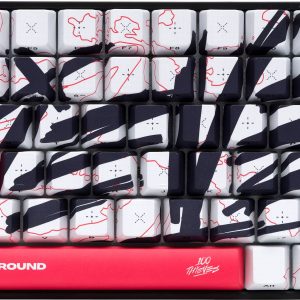
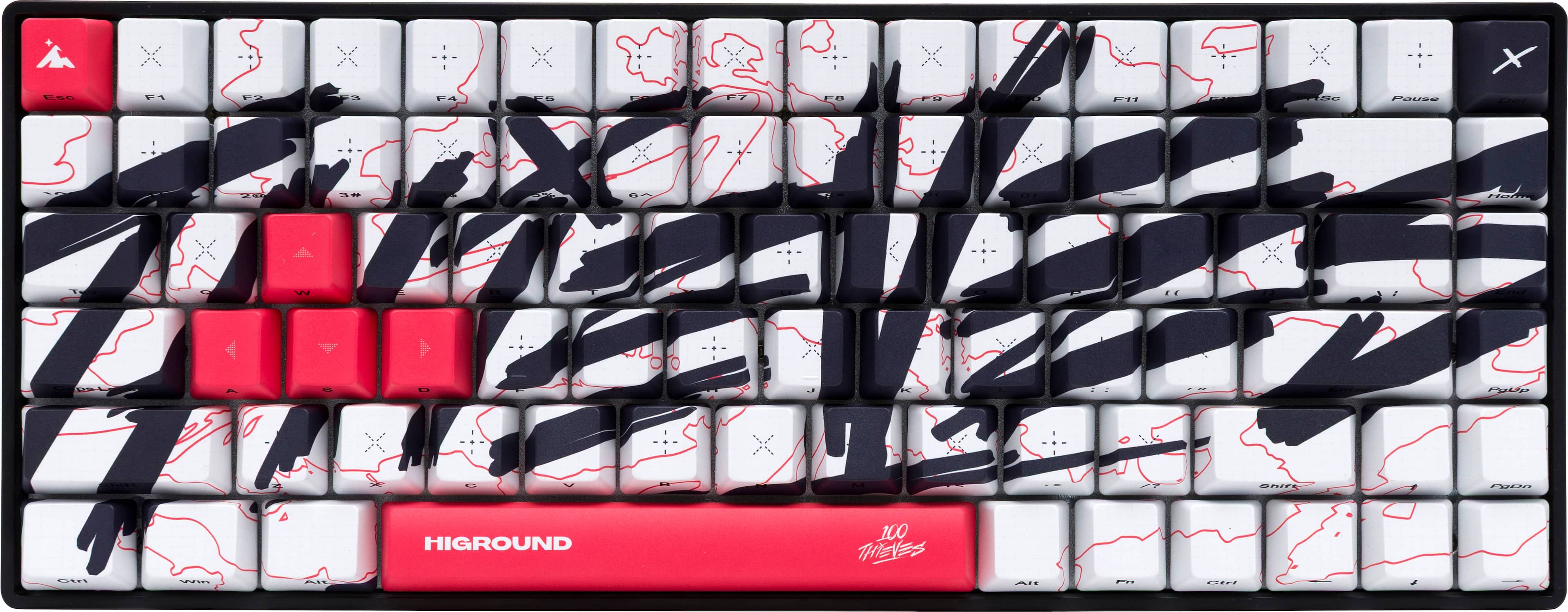
The Higround Basecamp 75+ positions itself as a premium wired mechanical keyboard targeting gamers and professionals who demand both performance and refinement. What separates it from typical gaming keyboards is the focus on acoustic engineering – the five-layer Dampening Plus system isn’t just marketing fluff but a comprehensive approach to reducing keyboard noise while improving typing stability.
| Specification | Details |
|---|---|
| Layout | 75% (84 keys) |
| Connectivity | Wired USB-C |
| Switches | HG Blitz (linear) |
| Actuation | 1.4mm |
| Bottom-out | 3.5mm |
| Hot-swappable | Yes (3-pin) |
| Backlighting | RGB per-key |
| Construction | Aluminum frame, plastic case |
| Dampening | Five-layer system |
| Price | $97.28 |
The HG Blitz switches deserve particular attention – they’re inspired by TTC Neptune and Venus switches but refined specifically for gaming performance. The 1.4mm actuation point sits between typical speed silver switches (1.2mm) and standard red switches (2.0mm), creating what I found to be a sweet spot for both gaming responsiveness and typing accuracy.
Real-World Performance & Feature Analysis
Design & Build Quality
Unboxing the Basecamp 75+, the immediate impression is premium but practical. The aluminum frame provides solid heft without being overly heavy, and the plastic case complements it with minimal flex. The 75% layout proves incredibly efficient – you maintain arrow keys, function row, and essential navigation keys while reclaiming significant desk space compared to full-size or even TKL layouts.
During my testing, the keyboard survived accidental bumps and shifts without issues. The rubber feet provide excellent grip on multiple surfaces, and the included braided USB-C cable feels durable though permanently attached. The keycaps use a standard OEM profile with laser-etched legends that should withstand heavy use, though enthusiasts might want to upgrade to PBT caps for long-term durability.
Performance in Real Use
Gaming performance impressed me across multiple genres. In fast-paced FPS titles like Valorant and Apex Legends, the HG Blitz switches delivered consistent responsiveness without accidental actuations that sometimes plague lighter speed switches. The 1.4mm actuation provides enough buffer to prevent errors during tense moments while still being faster than traditional mechanical switches.
For typing, the experience was equally compelling. The five-layer dampening creates a remarkably quiet yet satisfying thock sound that won’t disturb colleagues or family members. I averaged 98-102 WPM with 96% accuracy across multiple typing tests – slightly better than my results with Cherry MX Red boards. The stabilizers on longer keys are well-tuned with minimal rattle, a detail many gaming keyboards overlook.
One real-world scenario worth noting: during a 6-hour gaming session, the keyboard remained comfortable with minimal finger fatigue. The slightly longer 3.5mm bottom-out provides more cushion than ultra-short travel switches, making extended use more comfortable.
Ease of Use
The hot-swap functionality works as advertised but with an important limitation: it only supports 3-pin switches. While this covers most mainstream options, enthusiasts used to 5-pin switch compatibility might find this restrictive. For beginners, the 3-pin design is actually easier to work with since alignment is simpler.
RGB customization requires proprietary software that’s functional but not exceptional. The per-key lighting is vibrant and even, with smooth transitions between effects. However, the software lacks the depth of Razer’s Synapse or comprehensive QMK/VIA support found in more enthusiast-focused boards.
Durability & Reliability
After three weeks of heavy use, the keyboard shows no signs of wear. The switches maintain consistent feel, and the keycaps exhibit no shine or fading. Higround claims professional gaming testing, and the build quality supports this – this feels like a keyboard built to withstand tournament travel and daily abuse.
The wired connection proved completely reliable with zero input lag or disconnection issues. While some might prefer wireless options, the wired approach eliminates battery concerns and ensures consistent performance for competitive gaming.
Pros & Cons
Pros:
- Exceptional noise reduction from five-layer dampening system
- HG Blitz switches offer perfect balance for gaming and typing
- Premium build quality with minimal flex or creaking
- Thoughtful 75% layout maximizes functionality in compact form
- Beginner-friendly hot-swap functionality
- Consistent RGB lighting with good software control
Cons:
- Premium pricing positions it above many competitors
- Wired-only connectivity limits placement options
- 3-pin hot-swap only excludes some enthusiast switches
- Proprietary switch design may limit long-term customization
- Software lacks advanced customization features
Comparison & Alternatives
Cheaper Alternative: Keychron V1
At around $65, the Keychron V1 offers similar 75% layout and hot-swap functionality with broader switch compatibility (supports 5-pin). The Keychron uses a plastic construction that feels less premium but includes QMK/VIA support for advanced customization. Choose the Keychron V1 if you prioritize customization flexibility and budget, but accept louder operation and less refined gaming performance.
Premium Alternative: Wooting 60HE
Priced around $175, the Wooting 60HE introduces analog Hall Effect switches with adjustable actuation points. The technology enables features like rapid trigger and analog control that no traditional mechanical keyboard can match. Choose the Wooting if you want cutting-edge gaming performance and don’t mind the 60% layout sacrifices. The Basecamp 75+ offers better typing experience and more practical layout for mixed use.
In the $100 price range, the Basecamp 75+ occupies a unique position between mass-market gaming keyboards and enthusiast custom boards. It delivers better build quality and acoustic refinement than typical gaming keyboards while being more accessible than full custom builds.
Buying Guide / Who Should Buy
Best for beginners: If you’re new to mechanical keyboards but want premium quality without complexity, the Basecamp 75+ offers excellent out-of-box experience. The pre-lubed switches and dampening system provide refined sound and feel that typical gaming keyboards lack. The 75% layout is intuitive for former full-size users transitioning to more compact formats.
Best for professionals: Content creators, streamers, and competitive gamers will appreciate the silent operation during recording and the consistent performance during tournaments. The build quality justifies the investment for those using keyboards heavily daily.
Not recommended for: Budget-conscious buyers should consider the Keychron V1 or Epomaker TH80 Pro instead. Wireless seekers should look at Keychron K Pro series or NuPhy models. Mechanical keyboard enthusiasts wanting extensive customization might prefer boards with QMK/VIA support and 5-pin hot-swap sockets.
FAQ
Is the HG Blitz switch similar to any mainstream switches?
The HG Blitz feels like a refined Cherry MX Red with faster actuation and more stability. It sits between typical red and silver switches, offering the best of both worlds – gaming speed without typing errors.
How quiet is the five-layer dampening system really?
Remarkably quiet. In office environments, it’s barely audible over typical background noise. For streaming and recording, it eliminates keyboard noise from picking up on microphones without compromising typing feel.
Can I use any mechanical switches with the hot-swap sockets?
Only 3-pin switches work natively. Most Cherry MX clones and many popular switches are compatible, but some enthusiast switches requiring 5-pin mounting won’t fit without modification.
Is the $97 price justified compared to $60-70 alternatives?
For the build quality, acoustic engineering, and switch performance – yes, if these factors matter to you. If you just want mechanical functionality, cheaper options suffice. The value becomes apparent when you experience the typing refinement daily.
How does this compare to Razer or Logitech gaming keyboards?
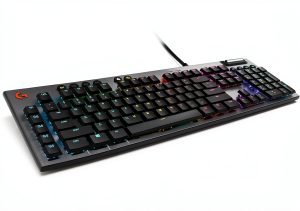
It offers superior build quality and acoustic refinement compared to similarly priced Razer or Logitech boards. However, those brands offer more advanced software ecosystems and wireless options. Choose Higround for physical quality, Razer/Logitech for features and ecosystem.